The moment we stepped off the Japan Airlines A350 at Tokyo Haneda, jet-lagged but exhilarated, I couldn’t help but smile. We had just flown halfway around the world in business class, and our two weeks of exploring Japan had cost us a fraction of the total value in cash. Let me tell you the story of how I strategically turned credit card points into the trip of a lifetime for my husband and I, unlocking over $30,000 in value while spending only a little over $7,000 out of pocket for our entire 14-day Japanese Sakura Season adventure.
The Dream Takes Shape
It all started a little over a year earlier, in late March 2024 on the way to Montréal. I had already been eyeing up destinations for our next big trip. We wanted to do something long and far away since we knew this may be our last big trip for a while as just a couple. Every other day, my socials were being splattered with posts about Japan. I was seeing more and more posts about the country and the sights, and about the aspirational award flights that could be had. The “blink-and-you’ve-missed-it” middle of the night award flight releases from the east coast USA to Tokyo. The willingness to fly to any airport that offered a route on JAL’s new A350. You had to be a super planner booking everything exactly a year in advance, or so flexible you could fly across the world with under a week’s notice.
Semi-stocked on points earned on my Capital One VentureX card from our upcoming trip to Portugal to see the Eras tour in May, I started mental accounting. Could we also make one of these aspirational redemptions? Could I be so lucky as to find 2 business class seats to Japan? Could I do it during Sakura season, the busiest tourist time of the year? I spent a few days sleuthing out a strategy, monitoring for drops, and keeping tabs on the calendar for what flights would be available.
Planning our flights became a game, an obsession. We needed to get from Baltimore to Japan, and we could only go if I could make this work. Thinking back to our 15 hour flight to Auckland for our honeymoon in economy spurred me to be as creative as possible to get lie flat seats for a flight of almost as long a duration. Luckily, we were able to easily access 5 major east coast airports and also were willing to reposition to just about any airport in North America that would get us access to one of the coveted business class award flights. I spent hours researching award charts, transfer partners, and sweet spot redemptions. The breakthrough came when I found that Cathay Pacific’s Asia Miles program offered incredible value for Japan Airlines flights, especially on their brand new A350 aircraft. For 89,000 points each, we could make it happen. Our flight to Montreal was early; we were on the road at 4am to Newark airport. What better time than that to book our next trip? A year out, we knew we could be flexible with the date as long as there was a reasonable chance to see the cherry blossoms in Tokyo. A search on the Cathay calendar showed two seats for March 31, 2025. Because I was anxious, I called Cathay Pacific and asked them to confirm the availability, then I transferred my points from my Capital One and Amex accounts while I was on the phone. The extremely kind and patient customer service rep completed the booking for me right then and there. That was it– we were going to Tokyo during cherry blossom season next year!
I knew that I had neither a plan for a flight back nor the points to get one at the time. I did eventually manage to swing us business class flights home using 60,000 American Airlines miles each at the very last minute. As in, sitting at breakfast the morning of our scheduled flight home. You can read the whole story about one of the most complicated (and potentially stupid) but worthwhile redemptions I’ve done here.
The Hotel Decision
After a few months passed and I had some time to relax in the summer, I decided to start looking at hotels I knew I wanted to use as many Hyatt points as I could given the high prices I knew we would be facing in the thick of cherry blossom season. And I knew that because I had waited (a busy work schedule, several other trips, a move across town, and frankly the volume of research needed to get this trip planning started delayed me) I knew I was behind the ball. Sure enough, only a few Hyatt hotels in Tokyo had availability. But lucky for us, one of those hotels was the Hyatt Centric Ginza. I snagged three nights at 29,000 points per night, transferred instantly from Chase to Hyatt. Since the cash rate was an astounding $1,500 per night in early April, this is one of the best values I’d ever gotten.
Next, I checked out what kind of value I could get in Kyoto. Although Park Hyatt Kyoto is world renowned, I simply did not have the points to stay there at this point. I also knew that we would be spending most of our time outside of the hotel exploring, and even if we could book it, we wouldn’t be able to properly enjoy all the hotel had to offer. I ended up booking the Hyatt Place Kyoto for its incredible value and strategic location. I generally prefer to stay a little further out from the main tourist areas to get some peace and quiet at night, and this fit the bill, plus it was on top of one of the main train stations in Kyoto, making it a perfect spot to easily explore in and around the city. I was able to use my category 4 free night award and paid for 2 additional nights at 9,500 points per night. Rates were going for about $250 per night at the time. This was not the best value probably, but I did prefer to spend my cash on activities and use up my points. Points bookings are also the most flexible, and I could change my plans down the road if needed.
One Hyatt hotel that I strongly considered but ultimately decided against was the Caption by Hyatt in Osaka. It was an incredible deal on points at only 6,500 per night, but with it being very new at the time I wasn’t totally sure that was the area I wanted to stay in or the kind of hotel I wanted to stay at. Ultimately, I don’t think I chose a better situation, but more on that later.
Tokyo Luxury: Our First Taste of Success
We had booked a cheap Southwest positioning flight from Baltimore to Dallas and spent the night downtown. We arrived at DFW the morning of our flight and had some breakfast in the spacious and relaxing American Airlines Flagship Lounge. We also popped into the Capital One lounge right next door, but it was so much more crowded that this normally delightful lounge felt like a huge downgrade. If you have access to both and are ever in doubt, I highly recommend choosing the Flagship lounge first.
We boarded our flight with remarkable efficiency. I got settled into my suite on the A350 and hung my raincoat in the tiny coat closet next to my sliding door. I laid flat as soon as I could, though because it was a daytime flight I didn’t get as much sleep as I otherwise might have. The next 14 hours in the air passed by remarkably quickly, and I very much enjoyed the warm service, the kaiseki meals, and on demand food and beverage.
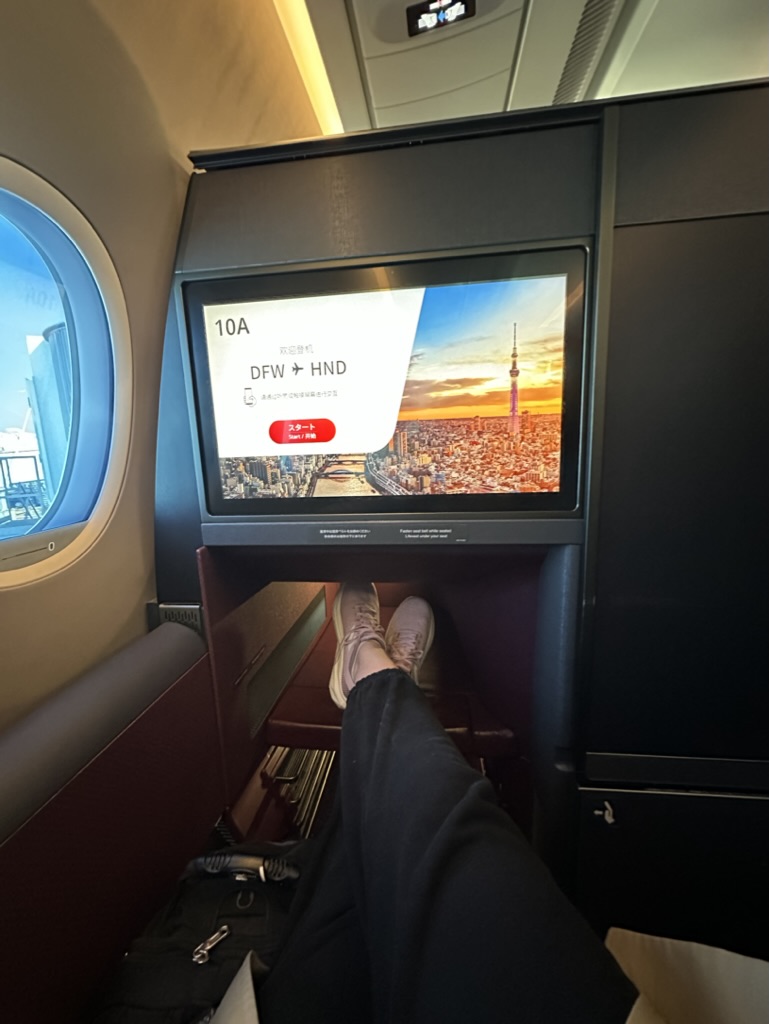
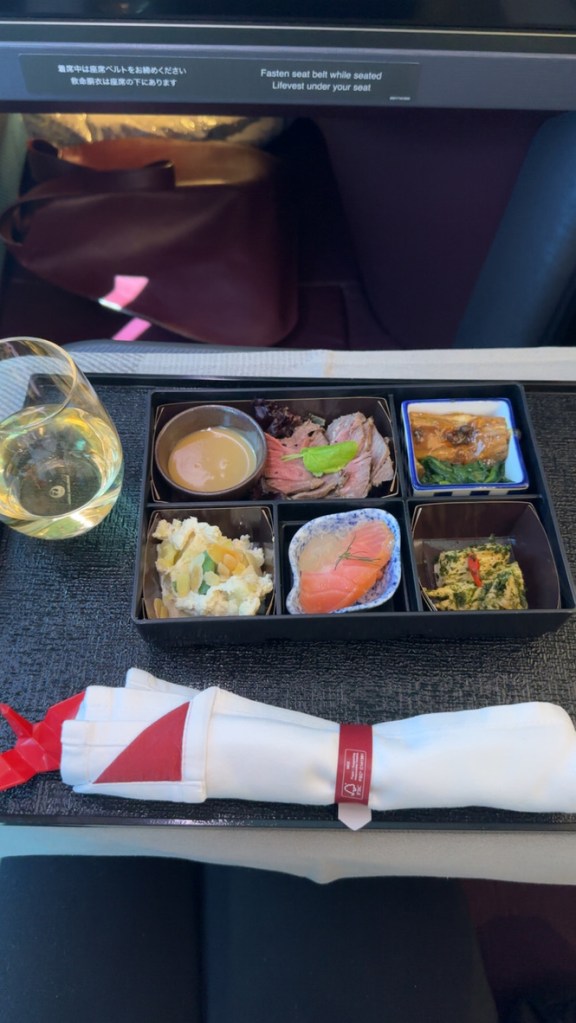
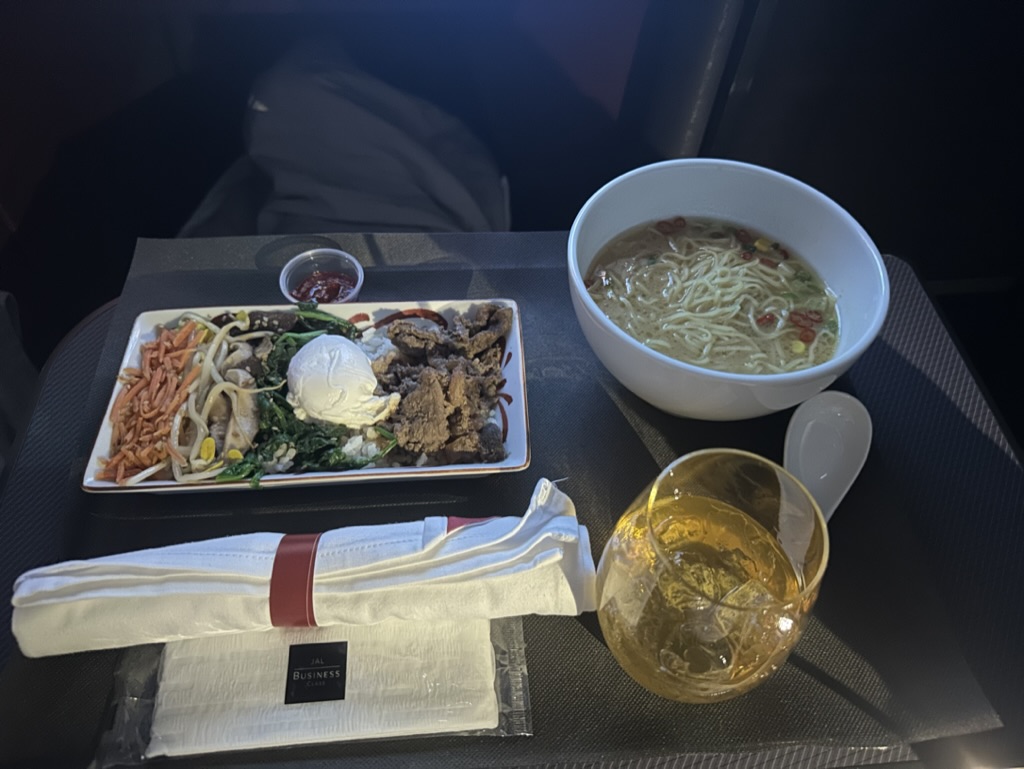
After landing, we cleared customs relatively quickly and loaded up our Suica cards on our Apple wallets with some funds to take the metro to Ginza. Our home for the first three nights was the Hyatt Centric Ginza, a modern luxury hotel in the heart of Tokyo’s most prestigious shopping district. Its close location to the metro was huge because it was absolutely pouring when we arrived in Tokyo.
Walking into the warm and inviting lobby, I felt a rush of satisfaction knowing we hadn’t paid a penny in cash for this experience. The room was tastefully appointed and felt bigger than it was, in part thanks to the open design of the room. The toilet and the shower are behind their own separate doors, but the sink and mirror are out in the open. I didn’t think I would like this arrangement, but it was actually quite convenient. We faced the main road, but the windows were impressively soundproof. To my horror, there was construction going on in the middle of the night on the street outside our room. Maybe it was a combination of jetlag and the windows but even as an exceptionally light sleeper, I could hardly notice it.
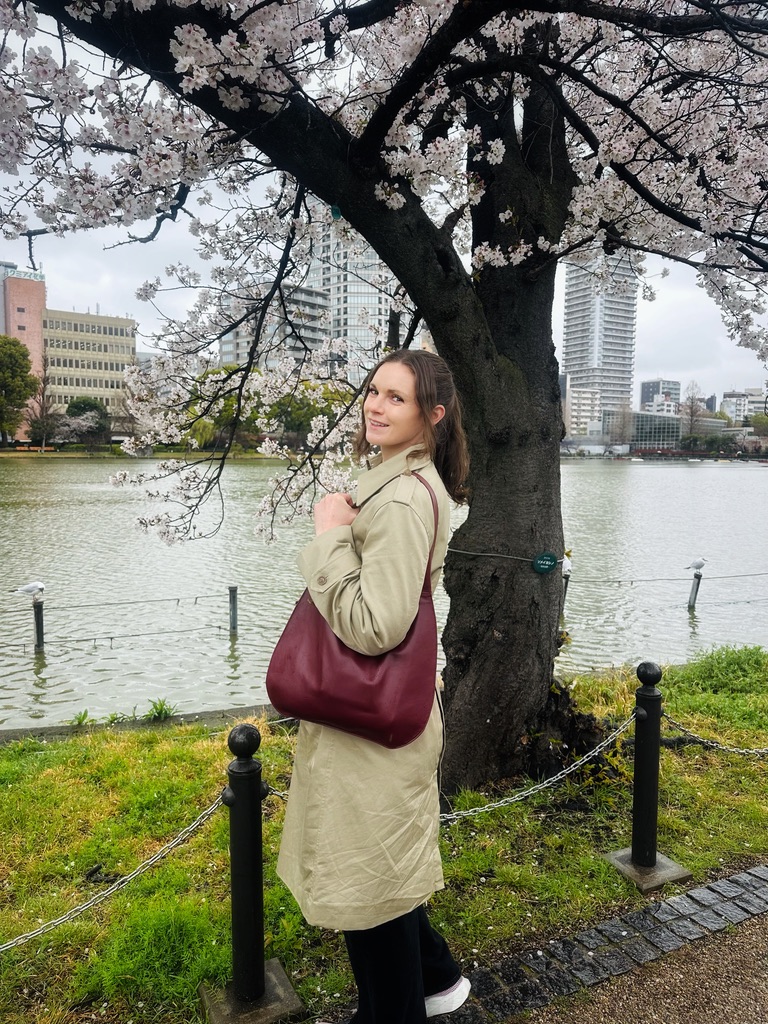
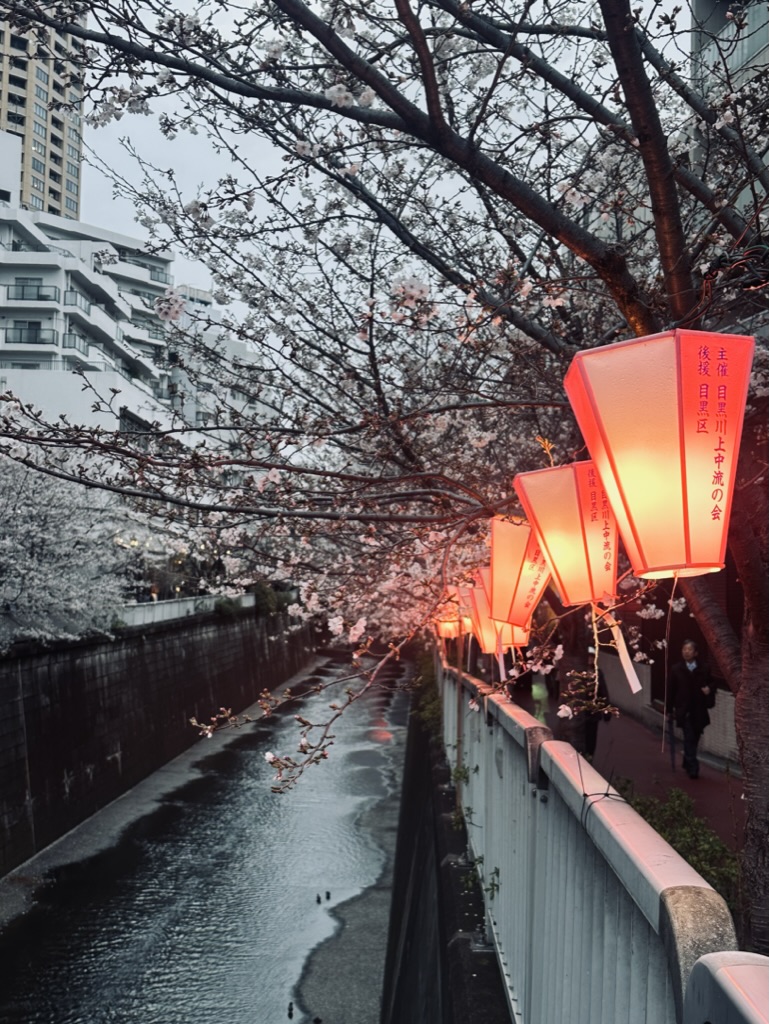
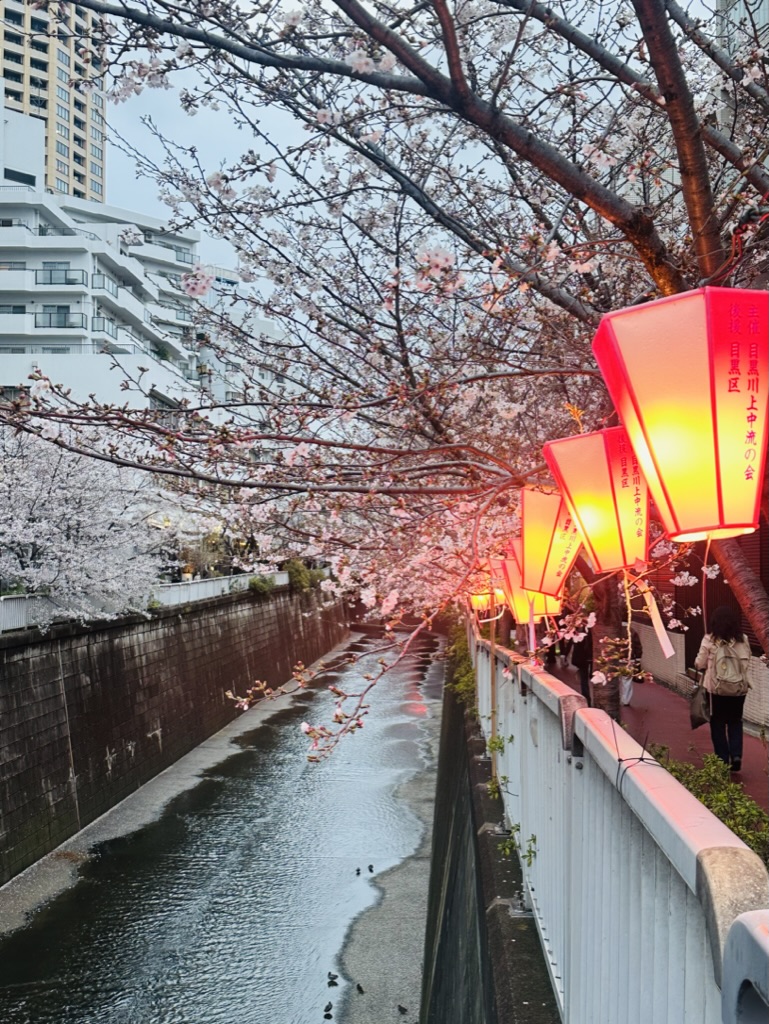
I saw those first few days in Tokyo from underneath my umbrella– it seriously rained almost the entire time we were there. But that didn’t stop us! We made it to nearly every park we had on our list (Shinuku park was the best), got a rare precipitation free moment at Shibuya sky, explored the Tsukiji fish market, and evening strolls through neon-lit streets. Every night, our room was a refuge, welcoming us back to dry off, warm up, and enjoy the free drink at the bar that comes with having Hyatt status.
Lake Kawaguchi: Our First Cash Splurge
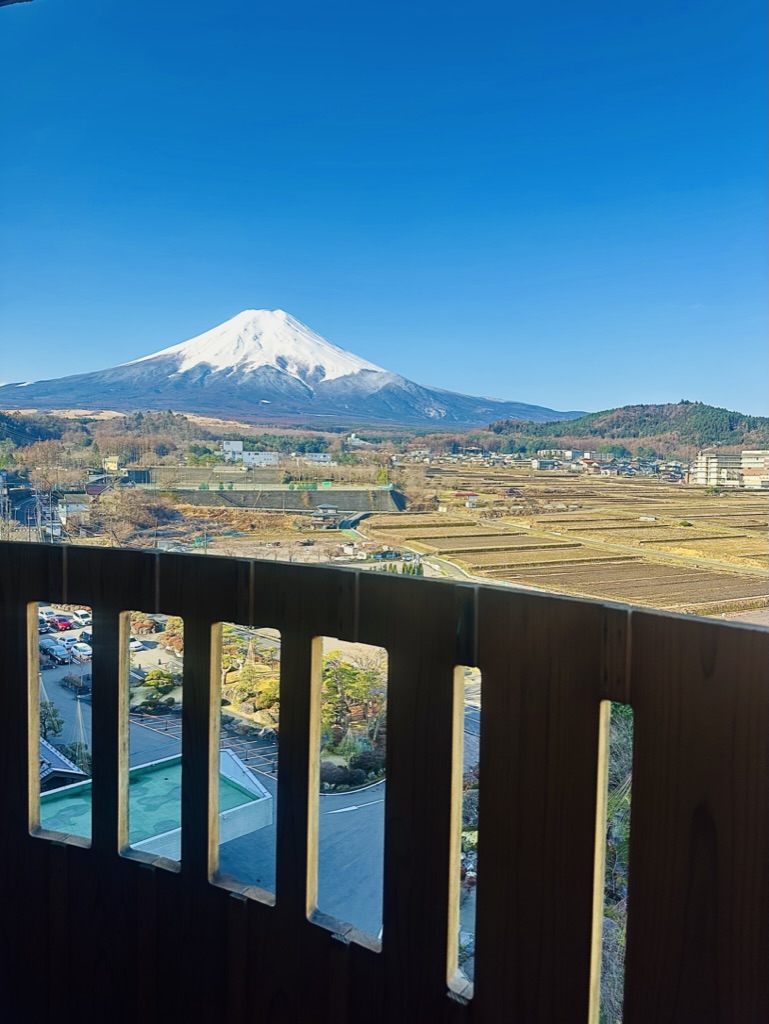
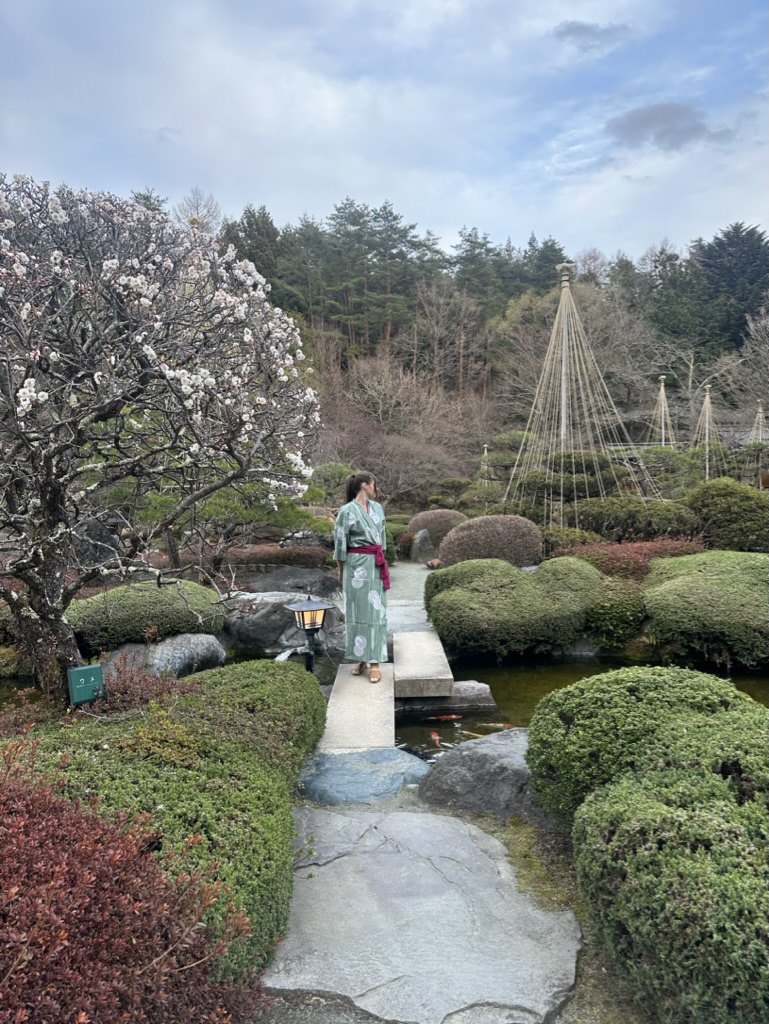
From Tokyo, we took the Fuji Excursion Limited Express from Shinjuku Station to Lake Kawaguchi where we rented a car and drove to our traditional ryokan. We stayed at Hotel Kanayamaen for two nights at a traditional ryokan. This was our first real cash expenditure – about $1,600 for the Sanri room with an outdoor onsen on the balcony, facing Mt. Fuji. The price felt a little steep at booking, but experiencing a traditional Japanese inn, complete with access to the wine lounge, gourmet kaiseki dinners, tranquil japanese gardens to walk around, and a matcha ceremony felt like money well spent.
Renting a car was useful to be able to easily get to Lake Kawaguchi and see the views of Mt. Fuji. Unsurprisingly, this is a popular spot for Japanese couples to take wedding photos! We enjoyed lunch at a Momiji-tei which served Hoto, a Yamanashi regional specialty noodle that was fantastic. We made it back in time to get changed into our yukata and go to our dinner reservation back at the ryokan.
Osaka: Street Food and Savings
We drove from Lake Kawaguchi to Mishima station, the easiest way to get a train to Osaka without doubling back to Tokyo. This is where I booked three nights at a mid-range hotel using cash to keep our points reserves intact for the premium properties. This is also where I might have made a mistake.
I booked Hotel The Flag, and the room was the smallest I had ever stayed in. It was so small that I literally couldn’t open my suitcase the entire way. We spent about $400 for the three nights’ accommodation here, and we got what we paid for. Aside from that, it was sufficiently clean and quiet. I considered changing hotels, but with it being such a busy time of year it just wasn’t worth the cost or hassle. Ultimately, it was a lesson to always at least check the room size dimensions!
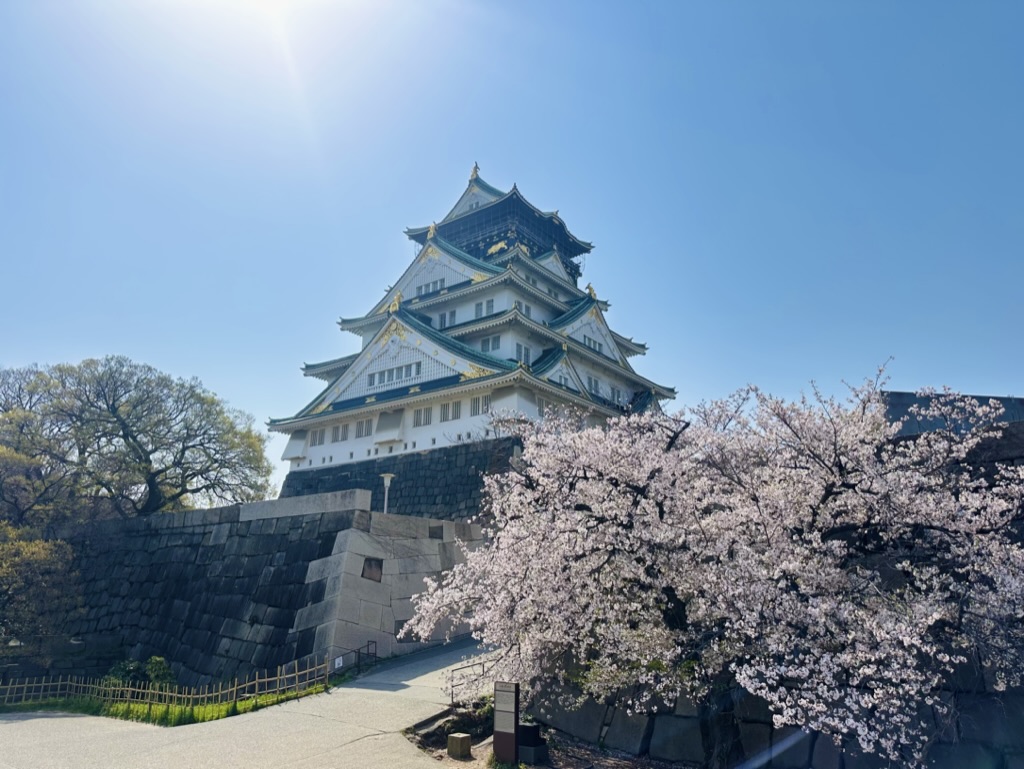
Osaka became our culinary headquarters. We splurged on the Hungry Osaka food tour that cost $175 for two and introduced us to hidden gems we never literally would have discovered alone or been way too intimidated to try. The money spent on experiencing Osaka’s food culture felt like an investment in memories we’d treasure forever. We saw tons of temples, made a day trip to Kobe, and sampled as much innovative Japanese food as we could.
Hiroshima: History and Reflection
The journey to Hiroshima aboard the train was smooth and efficient. For this portion of the trip, we purchased JR Kansai-Hiroshima Area Passes. This allowed us to use all of the JR transportation, including the train fromOsaka, to Hiroshima, the ferry to Miyajima island, and our train from Hiroshima to Kyoto in a few days, for one price.
Two nights in Hiroshima at Hotel The Knot cost us another $210 in cash. This hotel was a standout for the price. The rooms were renovated and felt luxurious. My only complaint was that I had booked a city view corner room, and we were put on the third floor at one of the busiest intersections in the city. There was no real view and a lot of road noise all night. The hotel was apparently totally booked and unable to move us. I had emailed in advance and requested a quiet room on a high floor, but they did not take this into account. This left a sour taste in my mouth, but otherwise it was a comfortable stay.
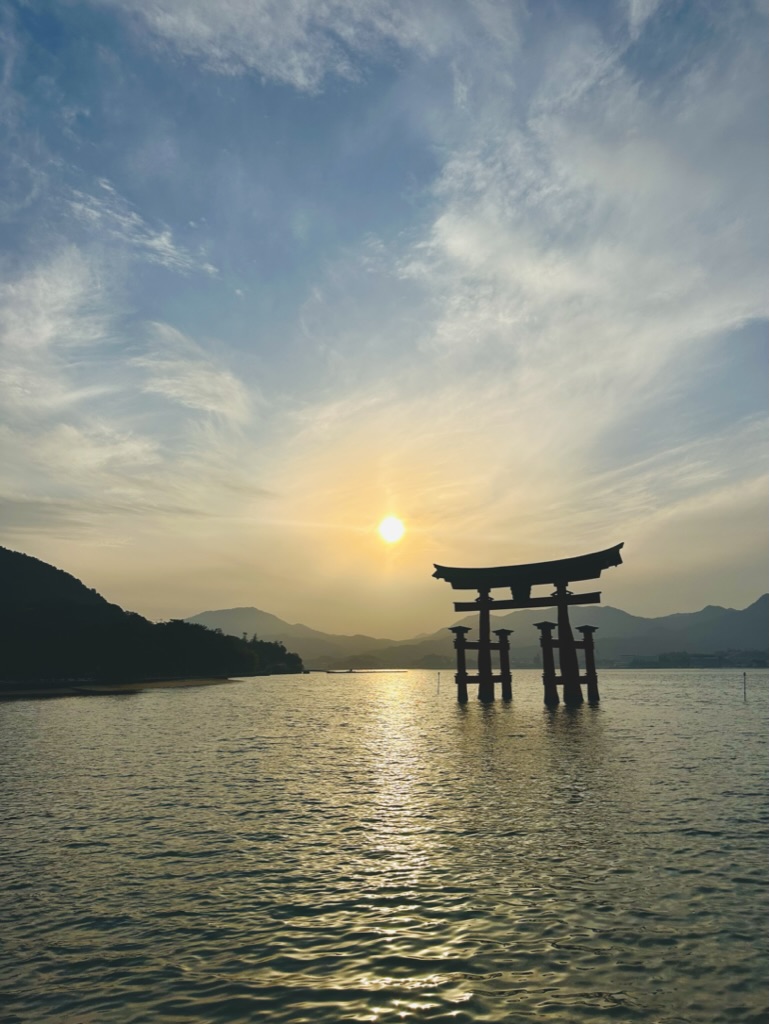
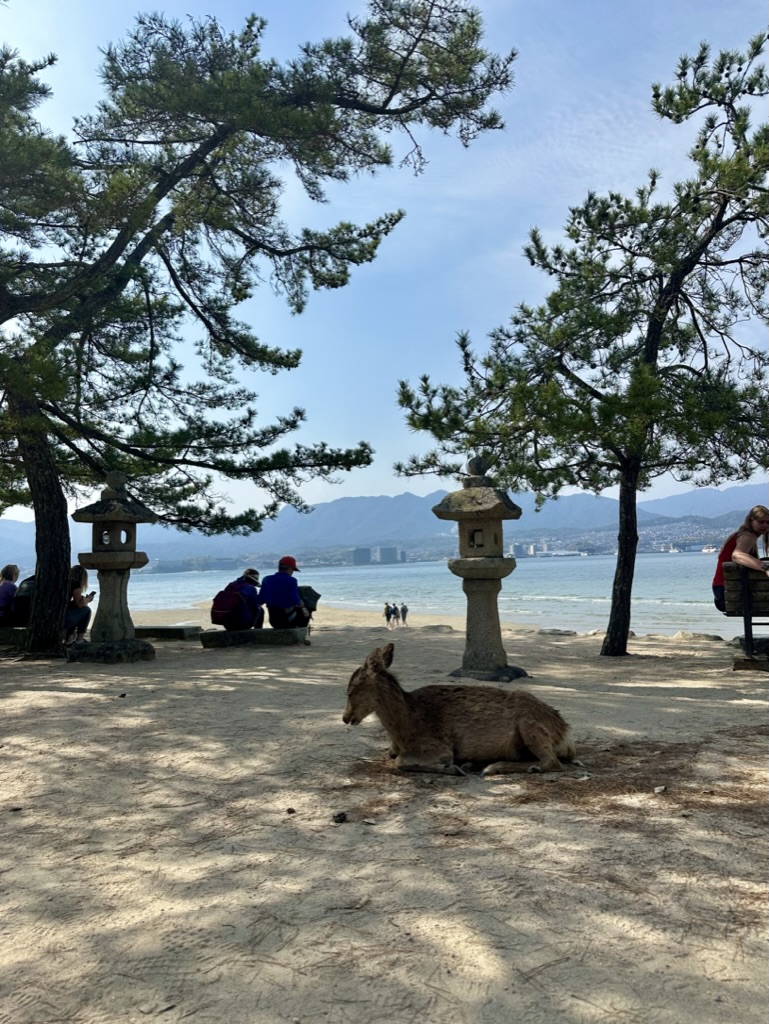
We started off by taking the bus then the ferry to nearby Miyajima island. We wandered the island for a few hours and saw the natural beauty of the island. Seeing the sunset over the famous floating torii gate created some of our most meaningful travel moments. We stayed after sunset for an intimate dinner at Niwa Cafe Miyama. We also got a late night snack of okinomiyaki back in Hiroshima– a really fun way to end the night.
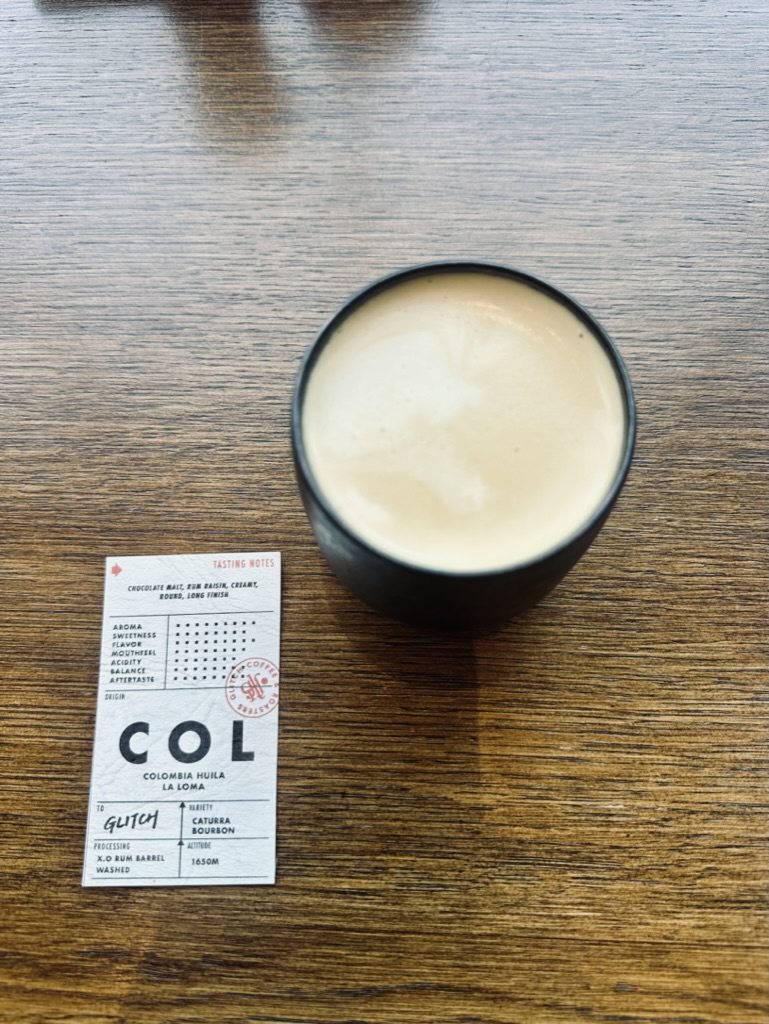
The next day we found one of my favorite coffee shops that we stopped at in Japan, Cue Coffee. Superbly cute, this one man operation had perfectly dialed in pour overs and manual lever crafted espresso. Expect a wait here because each drink takes time to make, but it was hands down some of the best I have ever tried.
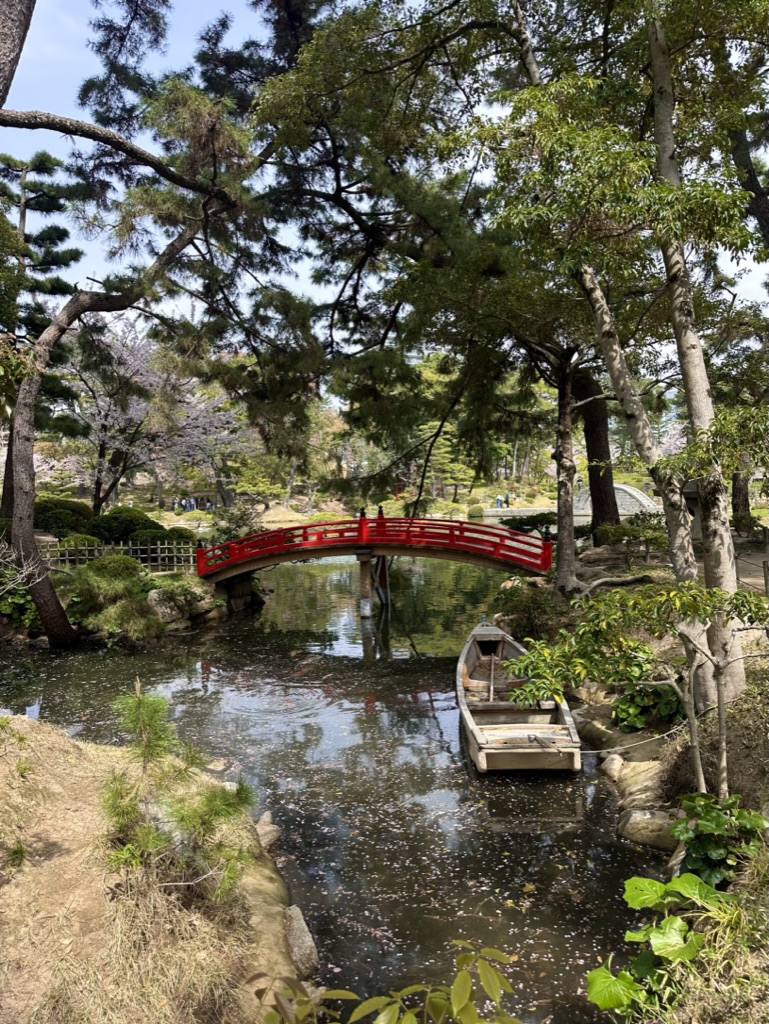
We walked around the beautiful and tranquil Shukkeien Garden, which was a small fee to gain entry to, before slowly making our way back to the middle of the city and going to the Peace Museum. This museum was quite impactful, especially as an American, and I am glad to have had the opportunity to see the city of Hiroshima today. Being able to see Hiroshima as a flourishing, vibrant city and proof of what humanity can overcome was the highlight of my trip.
Kyoto: Points Redemption Success Story
After our too-quick trip to Hiroshima, arriving in Kyoto felt like stepping into a completely different world. Ancient temples coexisted with modern conveniences, and we had three full days to explore this cultural treasure.
The Hyatt Place Kyoto really must be the best Hyatt Place in the world. The room was well appointed with high end Japanese finishes. It was quiet and very comfortable, and one of the more spacious rooms we had on our trip. It was also within walking distance of major temples, and access to the train couldn’t have been easier since we were on top of the station.
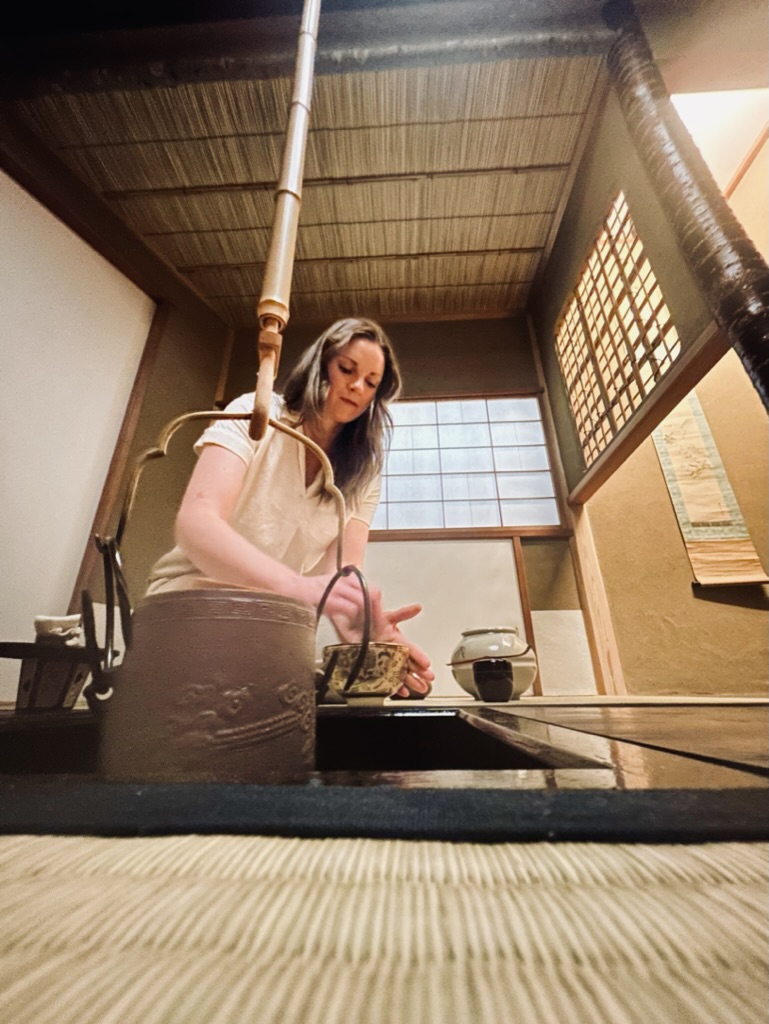
Kyoto was where we splurged on cultural experiences. A traditional tea ceremony cost $200 and taught us about the precision and mindfulness embedded in Japanese culture. We also spent freely on temple admission fees, local crafts, and memorable meals. A private guided tour with lessons in Japanese history and folklore helped us to understand the temples we were seeing more deeply. We also splurged on a high end sushi omakase meal, an experience in and of itself to see the master sushi chefs (itamae) perform their craft. I also splurged on some things to take home: high grade matcha, a gold ring I crafted myself, and a Kuoe watch.
The Grand Finale: Yokohama Strategy
Our final night presented an interesting logistical challenge. Our flight departed from Haneda the next evening, and staying in Tokyo would have been expensive. Staying another night in Kyoto would’ve added a lot of extra travel to an already long travel day. Instead, we chose to stay in Yokohama – just 30 minutes from the airport but significantly cheaper than central Tokyo.
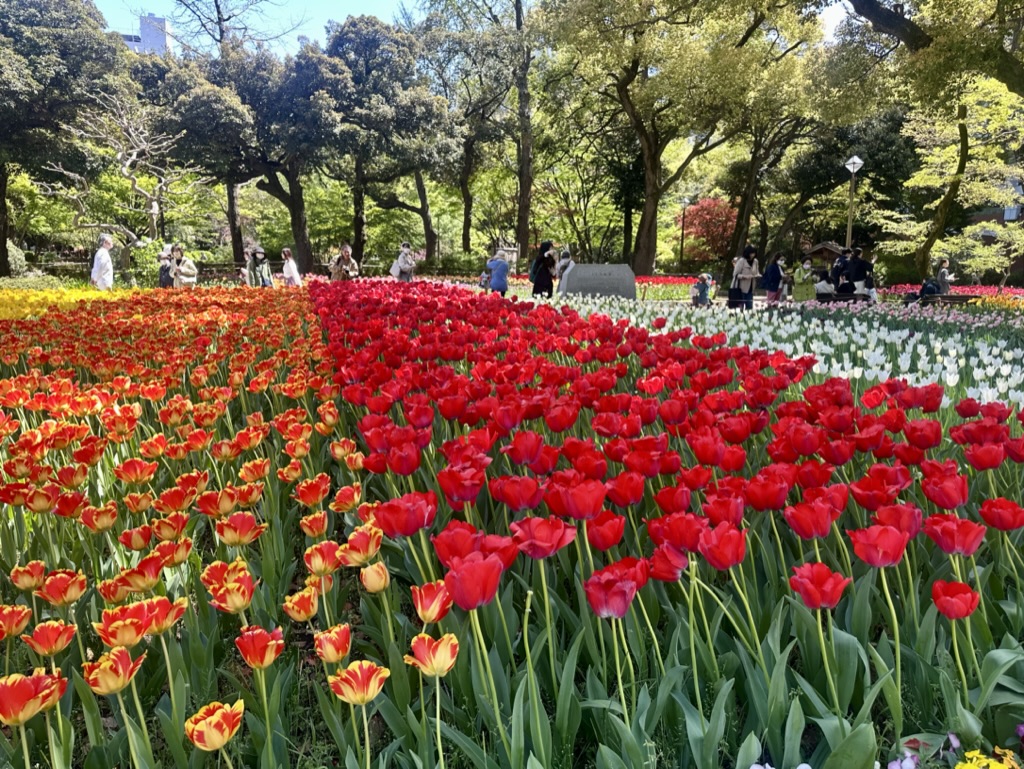
This $170 cash accommodation at Citadines Harbour Front Yokohama was covered by my Capital One VentureX annual $300 travel credit with some to spare. It was one of our smartest money-saving moves. The morning of our flight (after my mad-woman-moment of cancelling and changing our flight to the one booked with points) we explored Yokohama’s beautiful waterfront, walked around the blooming tulip gardens by the baseball stadium, and easily caught a train to Haneda. Sometimes the best travel hacks are the simplest.
The Journey Home
At Haneda airport, we easily checked our bags at the counter. The security line was absurdly long and I started to panic. This might have been the longest security line I had ever seen. I still wanted to get some things duty free and potentially enjoy the lounge, but at that rate I would have settled just for making our flight. I asked if there was priority security for business class customers and as luck would have it, there was. We walked past this long line of people all the way up to the front where we presented our boarding passes and went right through to the scanners. I got a bottle of Japanese whiskey for my brother at the duty free shop and headed to the JAL lounge to enjoy some food and drink before our final leg of the journey home. Now that is luxury.
I don’t ever want to be spoiled enough to complain about flying business class. But, all things considered, the American Airlines flight was a major downgrade from the Japan Airlines flight just two weeks before. There were no closing suite doors, the food was unimpressive, and the flight attendants seemed like they didn’t want any of us to be there. But the lay flat seat to get some rest was all that mattered, and the long flight gave us time to process our incredible two weeks in Japan. We’d experienced everything from luxury hotels to traditional ryokans, from street food tours to formal tea ceremonies, from bustling cities to serene mountain lakes. I already couldn’t wait to start planning our next trip.
The Final Tally: Value Beyond Money
When I calculated our total trip expenses back home, the numbers told an incredible story:
Points Redemptions:
- JAL business class to Tokyo: 178,000 points (value: $18,000+)
- American business class home: 120,000 AA miles (value: $8,000+)
- Hyatt Centric Ginza: 89,000 Chase points (value: $6,000)
- Hyatt Place Kyoto: 18,000 Chase points + free night (value: $750)
Cash Expenses:
- Airline cash flights, taxes and fees: $1,020
- Ryokan: $1600
- Osaka accommodation and food tour: $900
- Hiroshima accommodation: $210
- Train tickets and other transport: $750
- Kyoto experiences: $800
- Yokohama final night: $150
- Miscellaneous meals and activities: $1,800
- Total cash spent: $7,230
Total trip value: Over $40,000 Our actual cost: $7,230
The Lessons Learned
This trip really made me appreciate that strategic credit card points usage isn’t just about saving money – it’s about making dream trips accessible. Without points, this luxury Japan experience would have cost us $35,000. We would not have paid that. We would have flown economy, stayed in less nice hotels, and maybe would not have gone during Sakura season. We may not have even considered going at all, honestly. But with smart planning and strategic redemptions, we made a good trip a luxury one.
 Love Your Suitcase | Travel Planning & Points Optimization Expert
Leave a comment